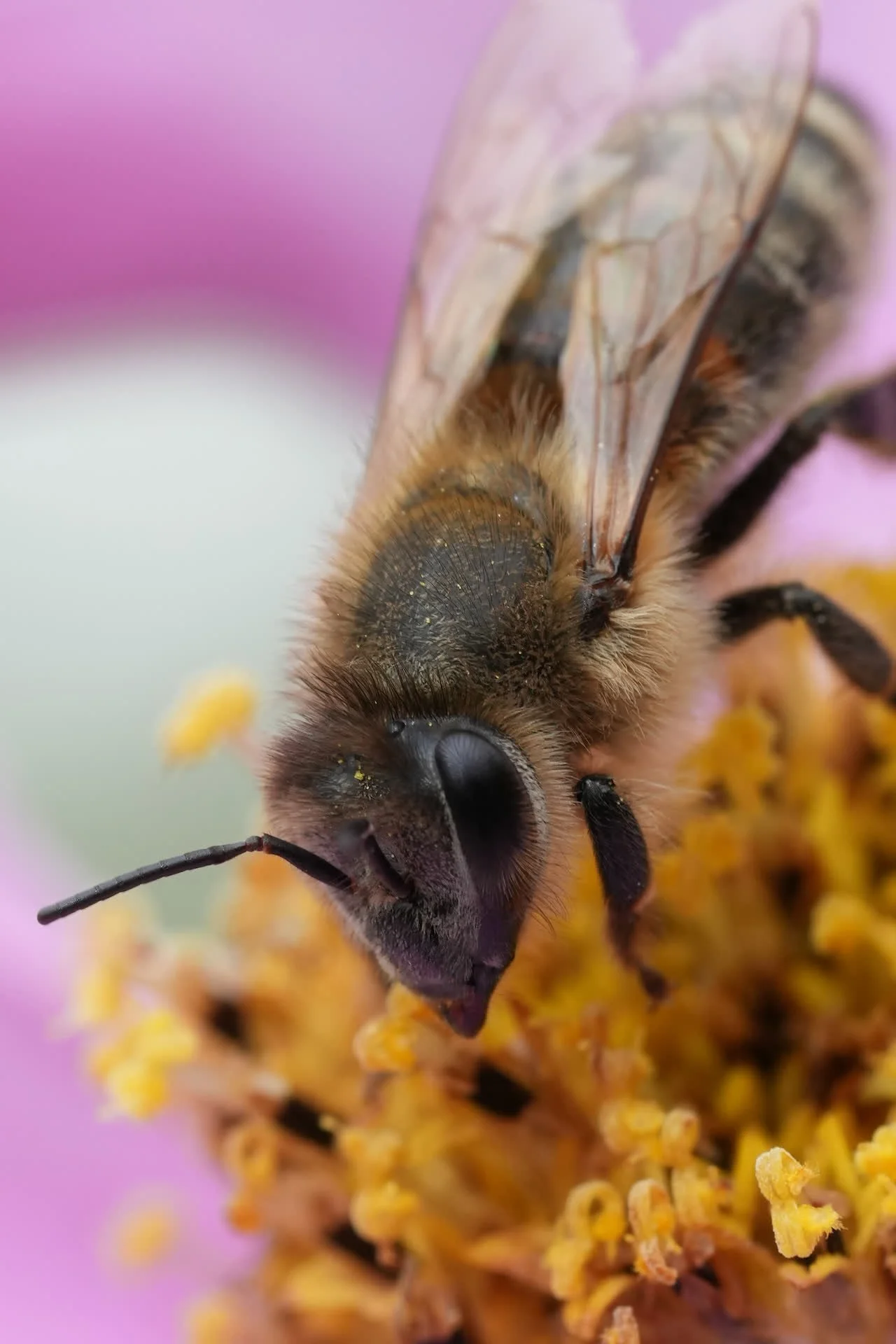
What the Bees Bring Home
We know the list of things killing honeybees by heart now: mites, pesticides, habitat loss, bad winters, worse nutrition. Researchers at Auburn and the USDA would like to add one more.
Antibiotics. Not just the ones beekeepers put in hives, but the ones that wash off farms — in manure, wastewater, runoff. The residues settle into soil, water, and air, and a foraging bee picks them up the same way she picks up pollen: incidentally. Then she carries them home.
A new paper in the Journal of the American Veterinary Medical Association is a review, not a verdict — the authors are blunt that the effects are still largely unknown. But the residues can disturb a bee’s gut microbiome and leave her more open to disease, piling onto every other stressor at once.
Auburn is already chasing it: a USDA grant funds a four-year study of poultry litter on crops and bee health.
The ask is modest: fewer antibiotics where they’re not essential, and other ways to keep hives healthy. The bees will do the rest. They’d just rather not bring the medicine home with the nectar.
Source: Huber et al., “Current and emerging threats to honey bee health: a One Health perspective on antibiotic pollution,” Journal of the American Veterinary Medical Association (2026), DOI 10.2460/javma.26.07.0607 — reported by AVMA/Phys.org, November 5, 2026.