The Bees in the Woods
Most bee talk happens at the meadow's edge — flower strips, hedgerows, prairie. But a new five-year study from the Xerces Society and Fordham University is asking what happens under the trees.
More than two-thirds of the Northeast's native bee species spend at least part of their lives in forests. They nest in rotting logs and bare patches, and they feed on the brief riot of spring wildflowers that blooms before the canopy closes. When deer eat the understory down and invasives crowd out the spring ephemerals, that grocery store empties in April.
This past spring, researchers surveyed bees at 26 Northeast forests, recording every plant visited. This fall, half the sites get plantings of locally sourced native species — then five years of watching to see whether the bees notice.
It's a reminder that habitat isn't always where you'd look for it. Sometimes the best thing you can do for a bee is tend the shade.
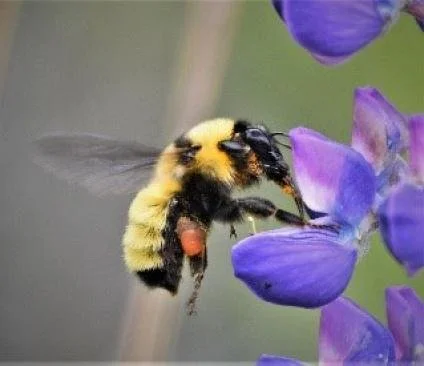
Photo: Golden northern bumble bee (Bombus fervidus) at the Aldo Leopold Seed Orchard — Jay Watson, Wisconsin Department of Natural Resources via U.S. Forest Service