America’s Bird Populations in Steep Decline
The Accelerating Silence:
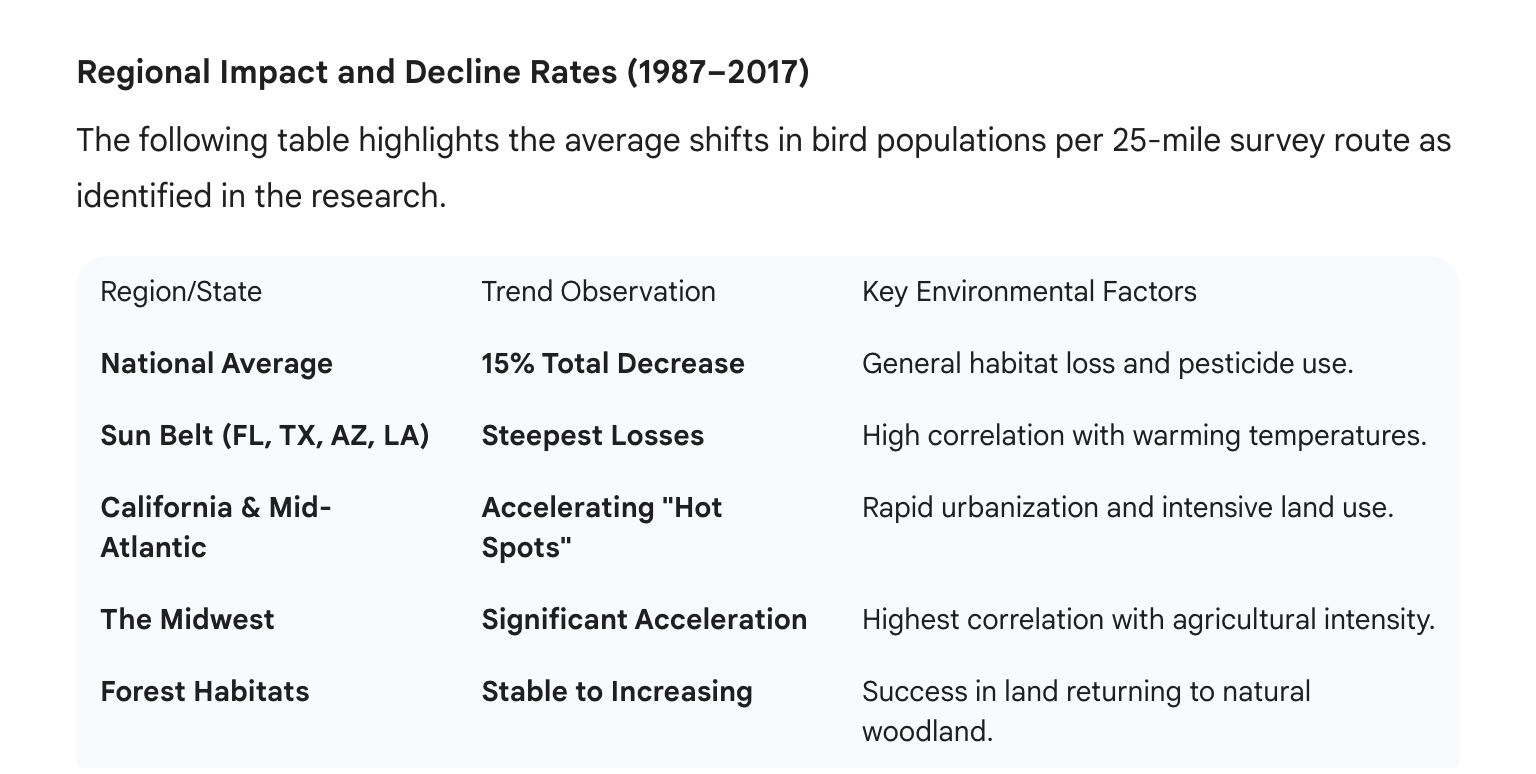
A landmark study published in the journal Science has issued a sobering warning: bird populations across the United States are not only shrinking but are doing so at an accelerating pace. Analyzing data from the North American Breeding Bird Survey between 1987 and 2021, researchers found that average bird counts per survey route dropped by roughly 15%. Most alarming is the "snowball effect" identified by the team; the rate of loss is increasing by an additional quarter-bird per year, meaning declines that began gradually are now rapidly intensifying in critical regions.
This trend is a stark indicator of failing habitat and conservation strategies. The study identifies agricultural intensity—specifically the use of pesticides and fertilizers—as the primary predictor of these accelerating losses. For conservationists, this highlights a "trophic collapse": intensive farming eliminates the insect populations that terrestrial birds depend on for survival. As diverse grasslands and wetlands are converted into chemical-heavy monocultures, birds lose both their food sources and nesting grounds.
Furthermore, the research points to a correlation between warming temperatures and steeper declines, particularly in the American South and West. This suggests that climate change is shrinking viable habitats faster than species can adapt. While forest-dwelling birds showed some stability due to land reverting to woods, the overall data serves as a "sentinel" for biodiversity. Without a shift from prioritizing short-term economic growth to integrated ecosystem management, these habitats may soon reach a tipping point where recovery is no longer possible.